AMD Radeon VII vs AMD Radeon Pro Vega II
Verdict
Our overall take, at a glance
Key takeaways
- AMD Radeon VII and AMD Radeon Pro Vega II are closely matched overall (within 1 points).
- AMD Radeon VII stands out on Benchmark G3D Mark: 16,808.
- AMD Radeon Pro Vega II counters with Core Specifications Base Power: 350 W, Core Specifications Maximum Power: 350 W, Memory Capacity: 32 GB.
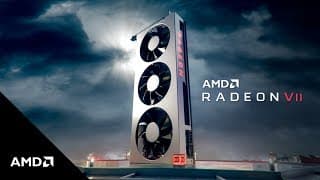
AMD Radeon VII and AMD Radeon Pro Vega II are closely matched
AMD Radeon VII
67
AMD Radeon Pro Vega II
67
Where AMD Radeon VII stands out
- Benchmark G3D Mark: 16,808
Where AMD Radeon Pro Vega II stands out
- Core Specifications Base Power: 350 W
- Core Specifications Maximum Power: 350 W
- Memory Capacity: 32 GB
In-depth analysisAI
AI-generated from the cited sources — may be incomplete or inaccurate; verify important details before deciding · generated Jun 2026.
AMD Radeon VII
The Radeon VII is a graphics processing unit released by AMD in 2019, intended primarily for professional and high-end workstation applications. It offers significant computational power beyond typical consumer use due to its robust design. This card was designed for users involved in demanding tasks such as digital content creation, computer-aided design (CAD), and specialized rendering.
Best for Workstation UseBest for Digital Content CreationBest for Advanced CAD Workflows
Pros
- Designed with a focus on Professional/Pro series usage rather than just gaming
- Supports diverse workflows like CGI, DCC, and high-performance computing tasks
- Its targeted professional nature relates to competition in the workstation graphics market
Cons
- The existence of specialized 'Pro' lines suggests it may be less relevant compared to current professional silicon generations
- It is part of a product line meant for enterprise or prosumer workflows, potentially lacking modern consumer features like advanced ray-tracing performance.
AMD Radeon Pro Vega II
The AMD Radeon Pro Vega was an enthusiast-grade GPU architecture utilizing the GCN 5th generation design. It was designed to provide high computational power and support for complex data processing, initially targeting demanding workstation and gaming use cases.
Best for Content CreationBest for Data SimulationBest for High-Performance Compute
Pros
- Features advanced compute capabilities via its Next-Gen Compute Unit (NCU) supporting various bit sizes.
- Offers exceptional memory bandwidth by incorporating HBM2 technology, enabling efficient handling of large datasets.
- Supports modern graphics APIs such as Vulkan and Direct3D feature level 12_1 for broader software compatibility.
Cons
- The architecture was based on older fabrication processes, which can limit energy efficiency compared to newer designs.
- Support from AMD for the series is relatively mature, with less regular driver updates compared to successors.
Value for Money
Which is the better deal for the price
Pre-filled with launch prices where known — enter today's price for an up-to-date check. Use the same currency for both.
AMD Radeon VII
AMD Radeon Pro Vega II
Performance
Higher benchmark score = faster
AMD Radeon VII16,808
AMD Radeon Pro Vega II15,592
Benchmark score — a measured indicator of raw performance, not a guarantee of real-world speed.
Review Videos
Hand-picked expert reviews for each product
Detailed Specifications
The full spec sheet, side by side